Solenoid Valve Automatic Irrigation System Selection Guide
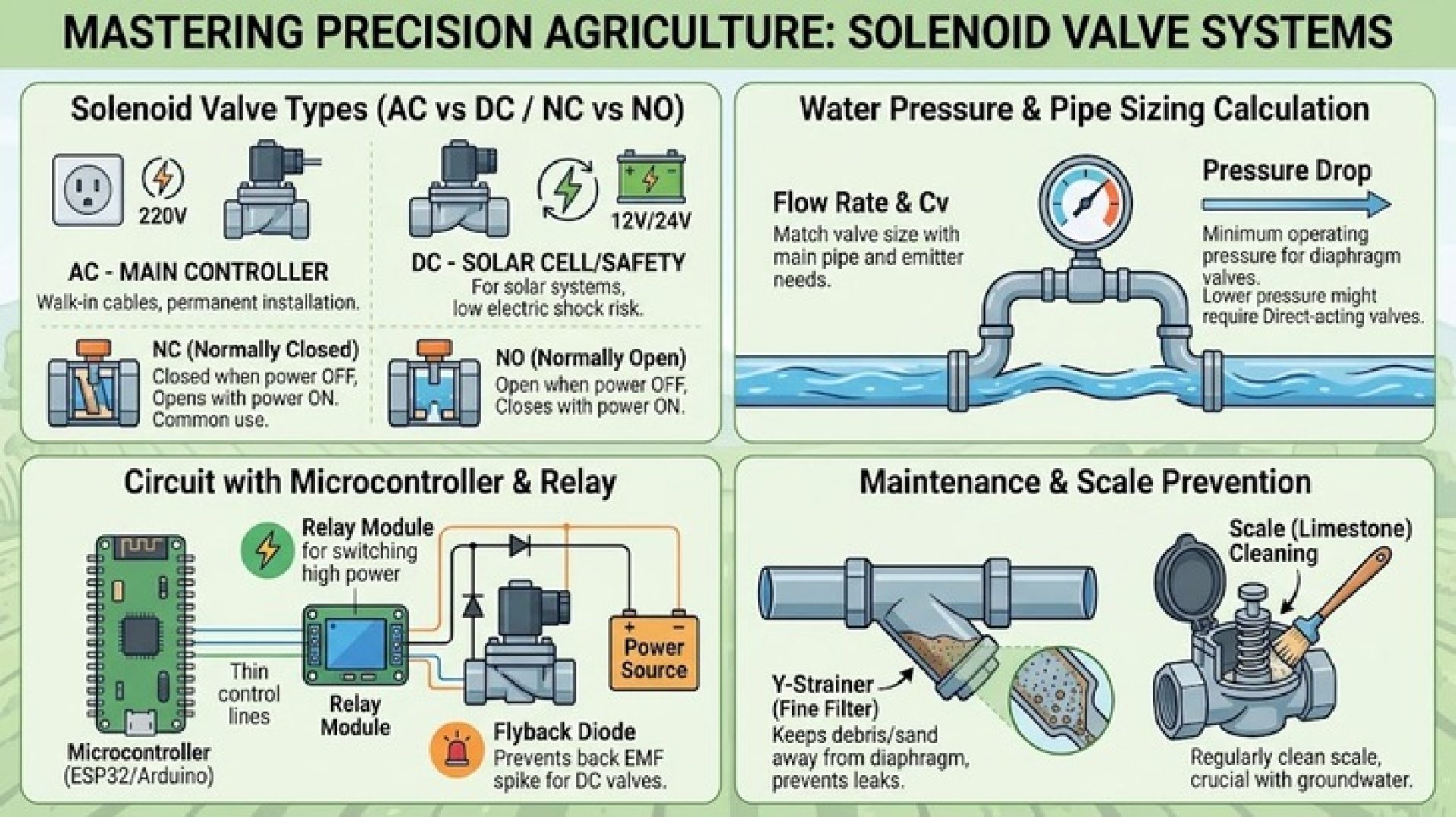
In modern precision agriculture, precise water and nutrient solution management is the ultimate key to success. Selecting the right Solenoid Valve Automatic Irrigation System tailored to your farm environment ensures high stability, prevents water leakage, and maximizes water and energy efficiency across open fields and smart greenhouses.
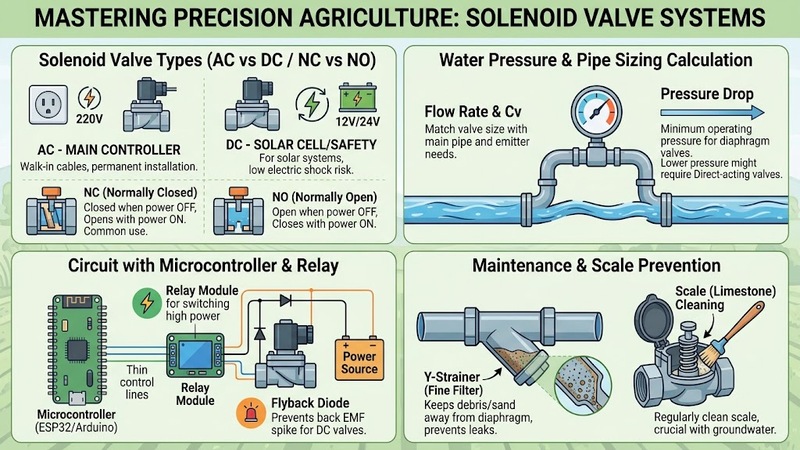
Understanding Solenoid Valve Automatic Irrigation System Types (AC vs DC / NC vs NO)
Applying a reliable Solenoid Valve Automatic Irrigation System in smart farming requires careful consideration of voltage types and default operating states to align with your central controller and power architecture:
- Voltage Specifications (AC vs DC Voltage): Alternating current valves (220VAC / 24VAC) are ideal for commercial farms equipped with standard electrical control panels and direct grid supply. Direct current valves (12VDC / 24VDC) excel in solar-powered setups (Solar Cells) and remote outdoor locations where electrical safety, low power consumption, and low voltage operation are paramount for farm operators.
- Default Operating States (NC vs NO): Normally Closed (NC) valves remain shut without power and open when energized. They are the standard choice for any Solenoid Valve Automatic Irrigation System to prevent accidental field flooding and nutrient loss during sudden power outages. Normally Open (NO) valves operate inversely and are suited for continuous flow protection lines.
Key Calculations for Solenoid Valve Automatic Irrigation System: Pressure and Pipe Sizing
Common irrigation issues such as incomplete valve opening, improper flow distribution, or pressure drops at sprinkler heads can be prevented through proper hydraulic planning and system sizing:
- Flow Rate and Flow Coefficient (Flow Rate & Cv Value): Match the valve orifice cross-section with main pipeline dimensions and total required water volume for emitters (Misting/Sprinklers) within that specific irrigation zone. Under-sized valves restrict flow and overload pumps, while oversized valves waste energy.
- System Pressure Loss (Pressure Drop & Operating Pressure): Most agricultural smart valves are Pilot-operated, requiring a minimum differential pressure of 0.51.0 Bar to properly lift the internal diaphragm. For low-pressure, gravity-fed systems (Gravity Feed), or rain harvesting storage tanks, select Direct-acting solenoid valves instead.
How to Interface Microcontrollers (ESP32/Arduino) and Relay Modules
Connecting electric valves to IoT control units, PLC platforms, or microcontrollers demands robust power driver circuits and surge protection mechanisms:
- Using Relay Modules (Optocoupler Relay Module): Since microcontroller output pins supply limited current (typically 12mA20mA), use optically isolated relay modules (Optocouplers) or MOSFET drivers to safely switch high electrical current to the valve solenoid coil.
- Surge and Voltage Spike Protection (Flyback Diode & Surge Protection): For DC inductive valve loads, install a flyback diode (such as 1N4007) across coil terminals to suppress high reverse voltage spikes (Back EMF) from damaging sensitive microcontroller boards during coil de-energization.
Maintenance Practices: Extending Lifetime and Preventing Valve Sticking & Scale Buildup
Proactive maintenance preserves internal rubber diaphragms, plungers, and electromagnetic coils over long-term operation in outdoor environments:
- Installing Disc or Screen Filters (Y-Strainer Filter): Fit an inline filter with at least 120 Mesh rating upstream of the valve inlet to block grit, sand, organic algae, and rust particles from clogging the pilot orifice or sticking under the diaphragm seat.
- Limescale & Mineral Removal: When using hard groundwater or mineral-rich fertilizer solutions, disassemble and soak internal stainless steel plungers, springs, and water passages in a mild citric acid or vinegar solution every 36 months to prevent sticky valve stems and seating leaks.
Selection Summary: To build a fully automated crop management layout, choosing a high-performance Solenoid Valve Automatic Irrigation System matched to your hydraulic pressure, pipe dimensions, and power supply, coupled with proper inline filtration, dramatically lowers ongoing maintenance costs and secures continuous automated performance. (Related guide: Learn more about Smart Farm IoT Controller Setup to optimize your water scheduling).