Automatic Venturi Fertilizer Injector: Sizing & Installation Guide
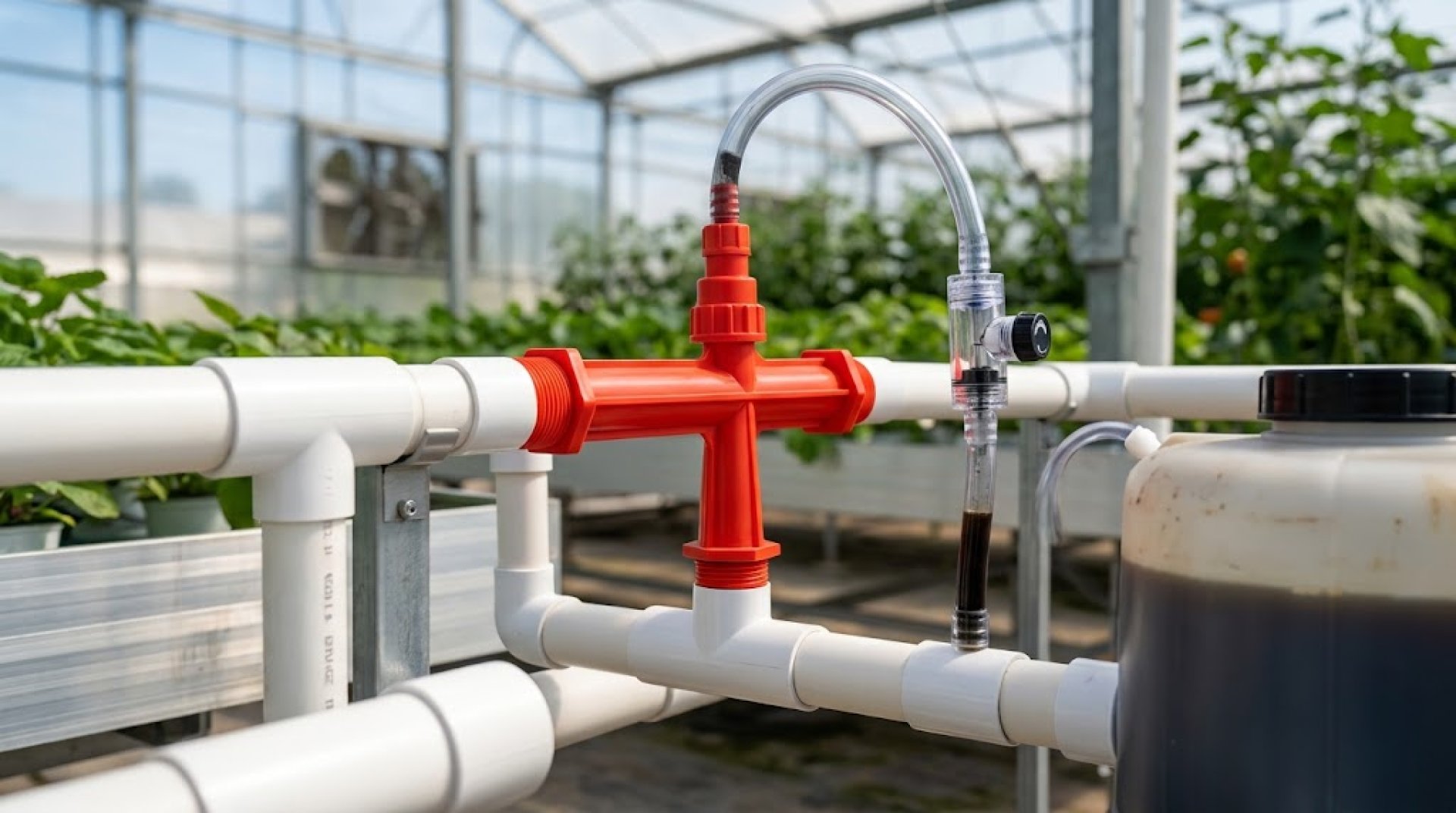
In modern agriculture and smart farm management, combining irrigation with automated fertilizationknown as Fertigationis a highly efficient technique that saves labor, reduces water waste, and optimizes crop nutrient absorption. The essential hardware powering this system is an Automatic Venturi Fertilizer Injector, an incredibly effective, precise, and non-electric dosing solution.
However, many growers experience operational challenges, such as the injector failing to draw fertilizer, significant inline pressure drops, or sizing mismatches relative to pump flow rates. This guide provides an in-depth look into Bernoullis principle, proper sizing calculations, pressure drop mitigation, and professional bypass installation practices.
Understanding Fluid Dynamics & Bernoulli's Principle in Venturi Injectors
The operational mechanics of an Automatic Venturi Fertilizer Injector rely on fundamental fluid dynamics, specifically Bernoulli's Principle and the Venturi Effect:
- Fluid Constriction: As high-pressure water from the irrigation pump enters the convergent cone of the Venturi tube, the throat constriction forces water velocity to increase drastically.
- Vacuum Pressure Generation: According to energy conservation laws, as fluid velocity accelerates through the narrow throat, its static pressure drops significantly, creating a localized vacuum (negative differential pressure).
- Fertilizer Suction and Homogeneous Mixing: This vacuum pressure draws liquid fertilizer from an external tank through a suction tube, blending it homogeneously into the primary irrigation stream before reaching emitters or sprinklers.
Selecting the Right Venturi Injector Size for Mainline Flow Rates
Selecting an improperly sized injector relative to your system's volumetric flow rate (m³/h) and operating pressure is the primary cause of suction failure:
- 1/2" to 3/4" Mainlines: Ideal for small greenhouse beds or hydroponic setups with low flow rates (0.29 0.81 m³/h). Pair with a 1/2" Venturi unit.
- 1" to 1.5" Mainlines: Suitable for medium-scale fruit orchards and drip lines requiring flow rates between 1.82 6.34 m³/h. A 1" Venturi injector is recommended.
- 2" Mainlines and Larger: Designed for extensive commercial farms using high-capacity pumps. Utilize 1.5" to 2" units capable of suction rates ranging from 200 to 1,200 liters per hour.
Overcoming Pressure Drop Issues with a Bypass Valve Assembly
A inherent characteristic of Venturi injectors is a 20% to 30% pressure drop across the throat. To prevent starved pressure at downstream emitters, installing a Bypass Assembly is mandatory:
Instead of installing the injector directly inline on the main pipe, construct a parallel bypass loop controlled by three ball valves (one main line valve and two inlet/outlet bypass valves). Partially throttling the main line valve creates the required differential pressure to drive suction during fertigation cycles. Once completed, fully opening the main valve restores full operational pressure across the field.
Comparison: Automatic Venturi Injector vs Electric Dosing Pump
Evaluate dosing methods according to operational budget and infrastructure setup:
- Automatic Venturi Fertilizer Injector: Cost-effective, zero electricity required, highly durable, chemical-resistant. Requires sufficient fluid pressure differential and introduces minor pressure drops.
- Electric Dosing Pumps: High precision dosing down to milliliters, zero pressure impact on mainlines. Higher initial investment, requires electrical power, and contains moving mechanical parts requiring frequent maintenance.
Conclusion: For farmers seeking a cost-effective, dependable, and power-free fertigation setup, utilizing an Automatic Venturi Fertilizer Injector with a parallel bypass assembly delivers outstanding fertilizer uniformity without sacrificing irrigation performance.
Recommended resources: Explore advanced irrigation guides at AgritechTH Smart Agriculture Hub and pair your setup with heavy-duty Automatic Solenoid Valves for streamlined automated control.
Frequently Asked Questions about Automatic Venturi Fertilizer Injectors (FAQ)
Q: Why is my Venturi injector failing to draw liquid fertilizer?
A: This usually occurs due to insufficient pressure differential between the inlet and outlet ports. Slightly close the main line bypass valve to increase differential pressure and force water through the Venturi chamber.
Q: Can I inject organic liquid fertilizers through a Venturi injector?
A: Yes, but the solution must be thoroughly filtered first. Unfiltered organic particulates can clog the narrow throat constriction and internal check valve, causing suction failure.