Automated Zone Fertigation System for Plant Nutrition Management
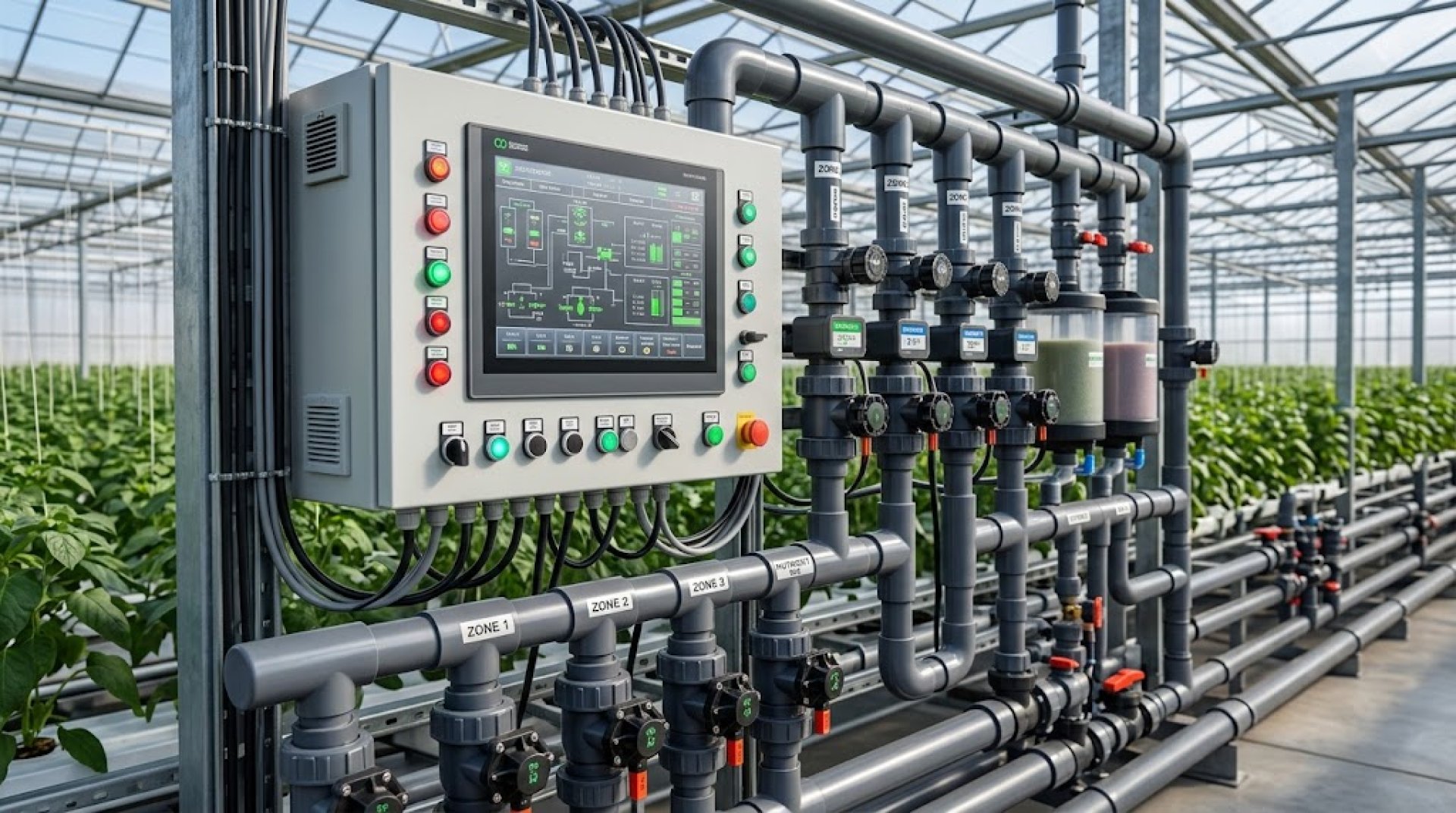
In medium to commercial-scale farms with extensive cultivation areas, applying nutrient solutions simultaneously across all zones can cause pressure drops and prevent nutrients from reaching distant plots. Implementing an Automated Zone Fertigation System is essential, allowing growers to manage irrigation and fertilization cycles precisely zone by zone using automated solenoid valves and microcontroller units.
This comprehensive guide explores operational workflows, flush cycles, chemical corrosion prevention, water flow rate calculations, and smart IoT agricultural logging.
Operational Workflow: Pre-Flush, Fertigation, and Post-Flush Cycle
A robust automated fertigation cycle consists of three critical phases to eliminate nutrient residue and maintain optimal pipeline conditions:
- Pre-Flush: Open the target zone solenoid valve with clean water for 5-10 minutes to pre-moisten the growing media and prepare plant roots before receiving heavy fertilizers.
- Fertigation Injection: Activate the Venturi injector or automated dosing pump to deliver nutrient solutions according to programmed timing or target EC levels across designated crop zones.
- Post-Flush: Turn off fertilizer dosing and flush the pipeline with clean water for 10-15 minutes to clear residual fertilizers, salts, and pH correctors from pipes and solenoid valves.
Preventing Chemical Corrosion in Solenoid Valves
A common operational failure in smart farms is premature solenoid valve breakdown due to mineral scale accumulation and chemical exposure. Key prevention strategies include:
- Material Selection: Choose industrial-grade solid brass solenoid valves or chemical-resistant engineering plastics (PP/PVDF) equipped with Viton seals resistant to concentrated acids and alkaline solutions.
- Automated Flush Programming: Ensure your control firmware mandates a clean-water rinse cycle at the end of every fertigation session to prevent corrosive solutions from lingering inside valve bodies.
Calculating Nutrient Delivery Rates Based on Flow Velocity
Fertilization precision depends heavily on accurate volumetric flow rate calculations and system parameters:
- Mixing Ratios: Match injection liters-per-hour ratios with mainline water flow velocities to hit targeted crop ppm requirements accurately.
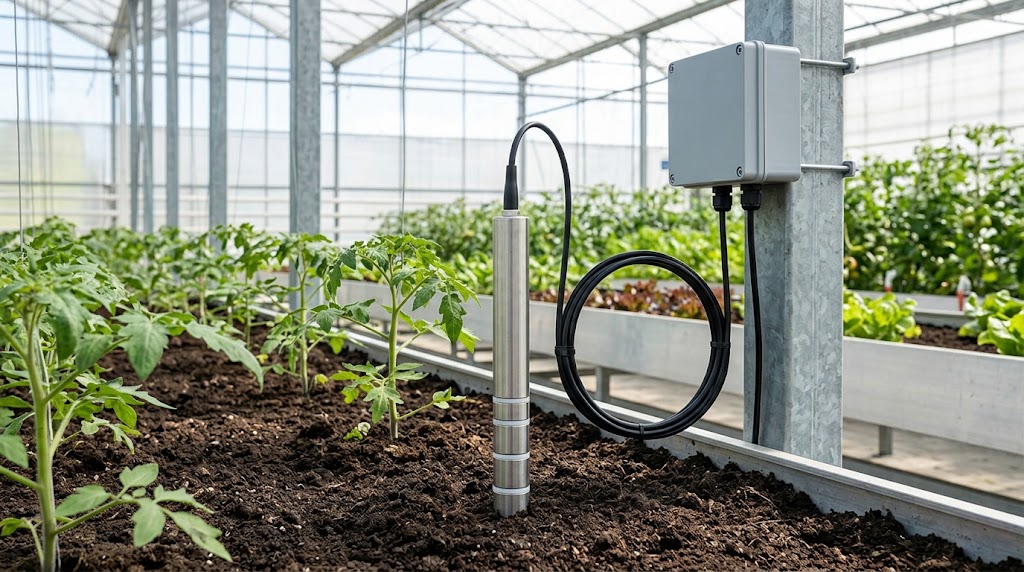
- Flow Meters: Install pulse flow meters on mainlines to feed real-time water volume data back to the microcontroller (ESP32), ensuring precise delivery tracking.
Daily Fertigation Logging and Monitoring via IoT Dashboards
For data-driven agronomy and precision farming, modern smart farming systems should record critical operational metrics:
- Cloud / MQTT Logging: Automatically log start times, zone durations, average pH/EC levels, and daily water consumption records.
- Remote Dashboards: Growers can review historical logs via mobile dashboards to fine-tune nutrient recipes according to specific crop growth stages.
Conclusion: Upgrading your commercial farm with an Automated Zone Fertigation System guarantees uniform nutrient distribution across all plots, reduces labor overhead, and extends hardware lifespan sustainably.
Recommended resources: Explore smart farm innovations at AgritechTH Smart Agriculture Hub and pair your setup with Automatic Solenoid Valves for streamlined fluid management.
Frequently Asked Questions about Automated Zone Fertigation (FAQ)
Q: Why is a flush cycle necessary after every fertigation session?
A: Flushing removes residual mineral salts and chemical deposits from pipelines and solenoid valves, preventing valve leakage or failure during subsequent cycles.
Q: Can standard household solenoid valves be used for fertigation?
A: Not recommended. Standard valves use rubber diaphragms that degrade rapidly when exposed to agricultural fertilizers and pH chemicals. Always use agricultural-grade valves with chemical-resistant seals.