PLC CODESYS Farm Control Systems & Programming Guide
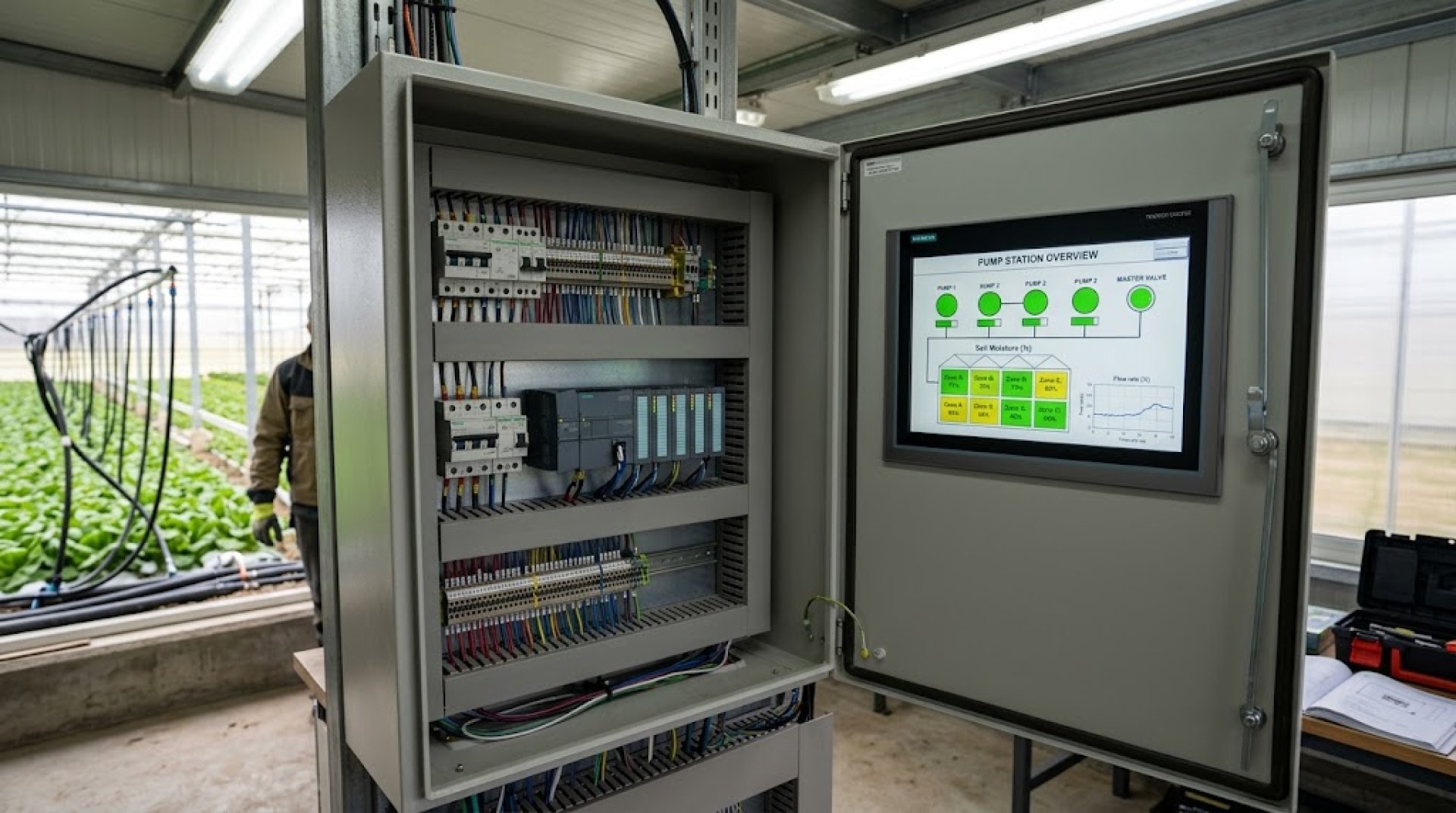
In commercial-scale agricultural facilities and modern greenhouse complexes, deploying highly reliable automation hardware is vital. Programming an industrial PLC CODESYS Farm Control system has established itself as the global standard for modern agronomists and automation engineers seeking precise, 24/7 management of irrigation, dosing, and climate conditions.
This comprehensive guide explores why commercial farms choose PLCs over basic microcontrollers, sequential programming with Ladder Diagram and CFC, HMI touch panel integration, and Cloud data streaming via OPC UA and Modbus TCP.
Why Industrial Farms Choose PLCs Over Standard Microcontrollers
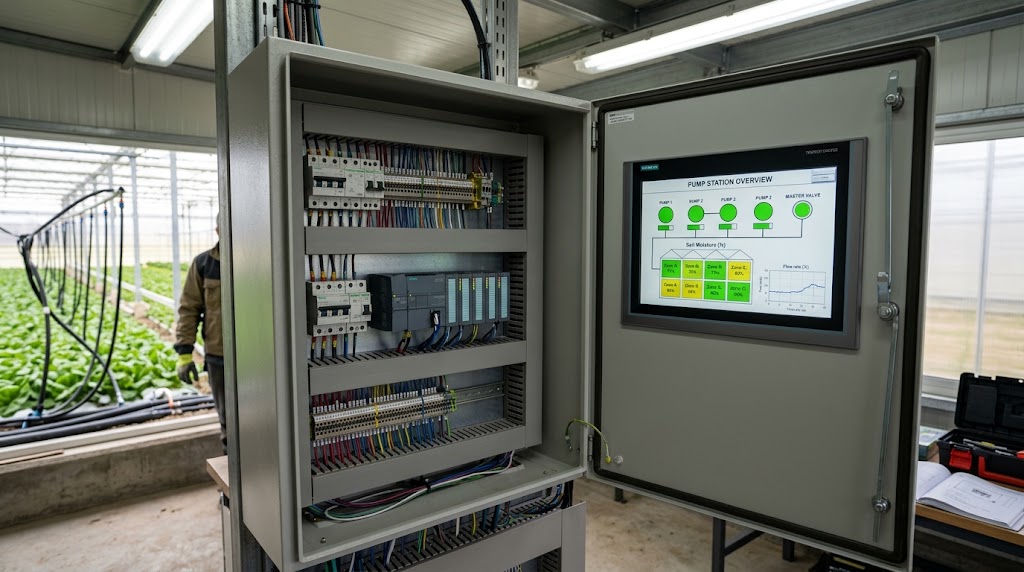
While hobbyist microcontrollers are inexpensive, adopting a PLC CODESYS Farm Control architecture provides distinct industrial advantages:
- Noise Immunity and Reliability: Industrial PLCs are engineered to withstand severe electromagnetic interference (EMI), inductive voltage spikes from pump motors, and high humidity without crashing or auto-resetting.
- Modular Hardware Scalability: Effortlessly expand digital and analog I/O modules to interface with dozens of soil sensors, flow meters, and solenoid valves.
- IEC 61131-3 Standardized Software: The CODESYS environment supports global standardized programming languages, facilitating structured code maintainability and long-term deployment stability.
Sequential Irrigation Programming Using Ladder Diagram and CFC
Designing structured irrigation and fertigation sequences inside a PLC CODESYS Farm Control environment can be achieved through multiple IEC languages:
- Ladder Diagram (LD): Ideal for safety interlock logic, such as verifying tank low-level switches before engaging main pumps, and configuring ON/OFF delay timers (TON/TOF) for zone solenoid valves.
- Continuous Function Chart (CFC): Perfect for graphical block diagram modeling, connecting real-time soil moisture, pH, and EC sensor inputs directly into PID control blocks to regulate variable pump speeds dynamically.
Interfacing PLCs with HMI Touch Panels for On-Site Control
To enable intuitive operation for farm technicians, linking the PLC CODESYS Farm Control unit to a rugged local Human-Machine Interface (HMI) is essential:
- Communication Mapping: Establish RS-485 (Modbus RTU) or Ethernet (Modbus TCP) protocols, mapping PLC memory registers (Holding Registers & Coils) directly to HMI variables.
- Visual Dashboards & Manual Overrides: The HMI displays real-time valve states, pump operational hours, and sensor trend charts while providing hardware Manual/Auto toggle buttons for immediate field control.
Streaming PLC Data to Cloud Servers via OPC UA and Modbus TCP
Transform your agricultural operation into a fully connected IIoT facility by linking the PLC CODESYS Farm Control system to Cloud dashboards:
- Embedded OPC UA Architecture: Leveraging the native OPC UA Server inside CODESYS allows SCADA software and Cloud gateways to browse and subscribe to PLC tag variables securely without manual address mapping.
- Modbus TCP Cloud Integration: Telemetry metricsincluding daily water consumption, motor running hours, and critical fault alarmsare streamed directly to Node-RED or cloud databases for worldwide mobile access.
Conclusion: Implementing a robust PLC CODESYS Farm Control solution delivers unmatched stability, operational safety, and scalability for large-scale precision agriculture.
Recommended resources: Explore smart farm innovations at AgritechTH Smart Agriculture Hub and pair your setup with Automatic Solenoid Valves for streamlined fluid management.
Frequently Asked Questions about PLC CODESYS Farm Control (FAQ)
Q: Why is CODESYS widely adopted in agricultural PLC programming?
A: CODESYS is a vendor-independent IEC 61131-3 development environment compatible with hardware from leading manufacturers (e.g., WAGO, Schneider, Beckhoff) featuring built-in IoT stack capabilities.
Q: Does the PLC continue operating if internet connectivity drops?
A: Yes, 100% autonomously. All control logic executes locally on the PLC hardware. An internet outage only affects remote cloud telemetry viewing.