Dissolved Oxygen DO Sensor System for Smart Farms

In modern agriculture and high-density aquaculture, the critical factor determining yield success is the amount of dissolved oxygen in the water. Implementing a reliable Dissolved Oxygen DO Sensor system is essential to ensure plant roots receive sufficient oxygen and to effectively prevent fish kills caused by low oxygen levels.
This article explores the importance of DO levels in root zones, real-time optical sensor technology, Nano Bubble integration, and applications in Aquaponics systems.
The Importance of DO Levels for Plant Root Nutrient Uptake in DWC (Deep Water Culture)
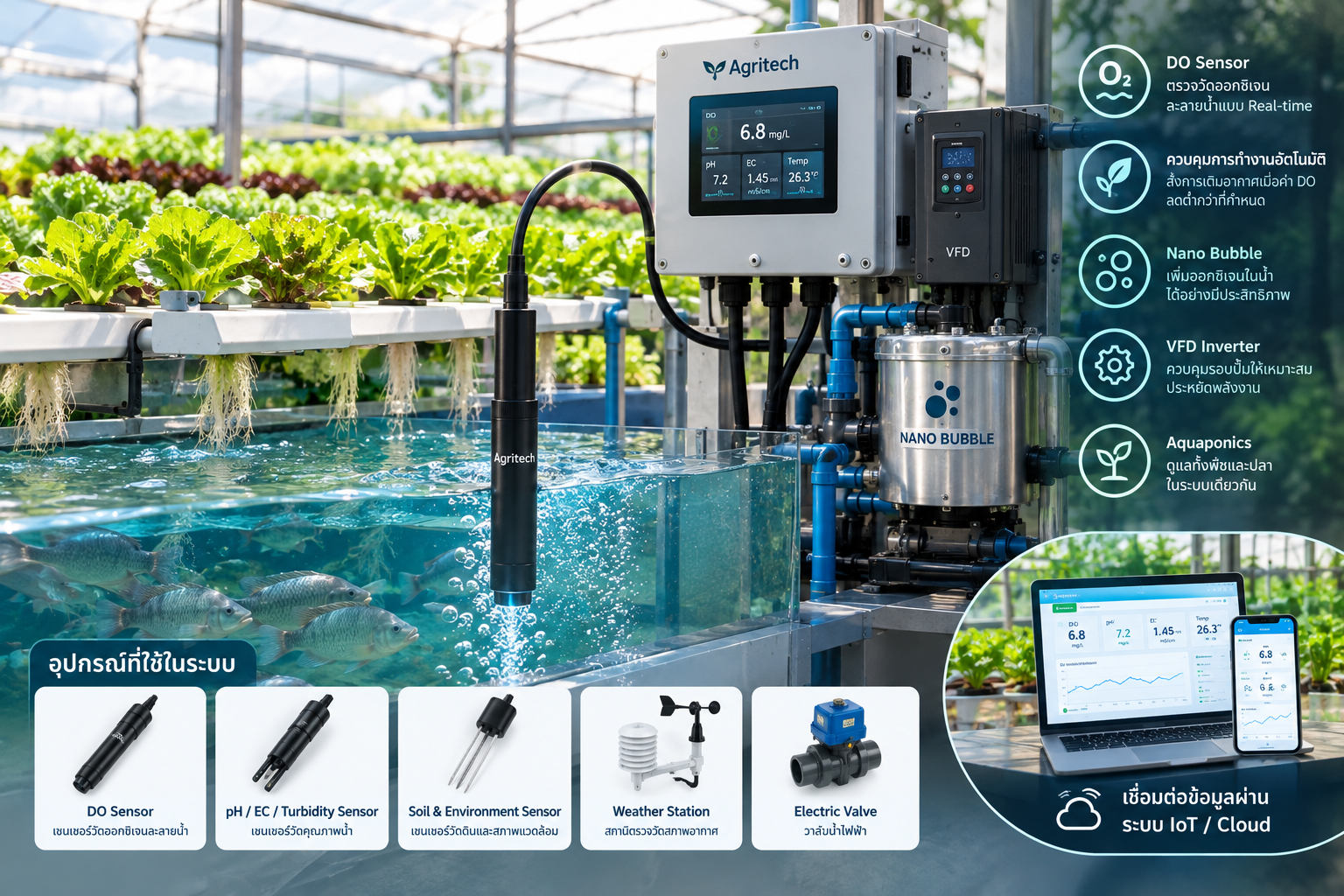
For floating root hydroponic systems, utilizing a Dissolved Oxygen DO Sensor plays a vital role because plant roots remain submerged in water continuously. If dissolved oxygen levels drop below standard thresholds (ideally 5-8 mg/L), roots suffocate, develop root rot, and lose the ability to absorb N-P-K nutrients even when fertilizers are abundant.
Real-time Water Monitoring Using Optical DO Sensors
Modern measurement technology has shifted toward Optical DO Sensor units, which operate on the principle of luminescence to detect oxygen levels. Key advantages include extreme stability, zero need for frequent membrane replacements or electrolyte solution refills compared to older galvanic models, and seamless real-time signal transmission to PLCs or IoT controllers for automated processing.
Automated Aeration Control via Nano Bubble Generator and VFD Inverter
When the Dissolved Oxygen DO Sensor detects that DO levels have fallen below set points, the automated system triggers a Nano Bubble Generator alongside pump speed control using a Variable Frequency Drive (VFD) inverter. Nano-scale microbubbles allow oxygen to dissolve rapidly and remain suspended in water significantly longer than standard aeration bubbles.
Applications in Integrated Aquaponics Systems (Fish Farming & Hydroponics)
In recirculating Aquaponics systems, maintaining oxygen balance is a top challenge because both fish in rearing tanks and hydroponic crops require strict environmental care. Installing a Dissolved Oxygen DO Sensor monitors overall conditions and automatically activates aeration mechanisms, preventing systemic failure seamlessly.
Summary: Upgrading farms with a Dissolved Oxygen DO Sensor and nano-bubble technology maximizes agricultural and aquaculture productivity sustainably.
Recommended resources: Explore advanced farm management technologies at AgritechTH Smart Agriculture Innovation Hub and choose high-precision water and air control equipment.
Frequently Asked Questions (FAQ)
Q: Why are Optical DO Sensors superior to traditional sensors?
A: They utilize luminescence principles, eliminating coating degradation issues, requiring minimal calibration, and offering high durability against scaling in harsh agricultural wastewater.
Q: What is the ideal DO level for combined plant and fish systems?
A: Dissolved oxygen levels from the Dissolved Oxygen DO Sensor should generally be maintained between 5.0 and 8.0 mg/L to ensure rapid and healthy growth for both crops and aquatic life.