Solenoid Valve Automated Irrigation System | AgritechTH
Understanding Solenoid Valve Types (AC vs DC / NC vs NO)
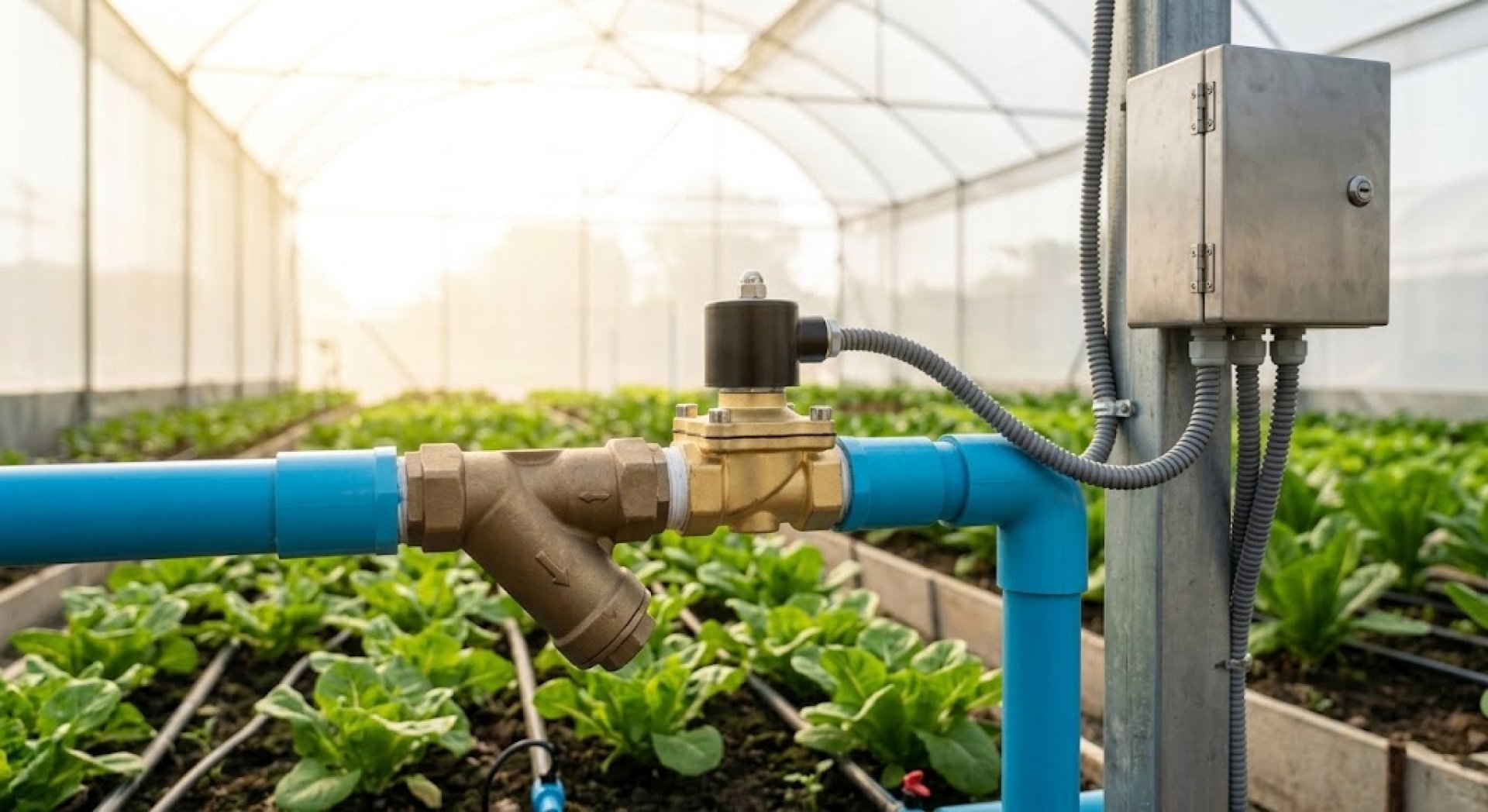
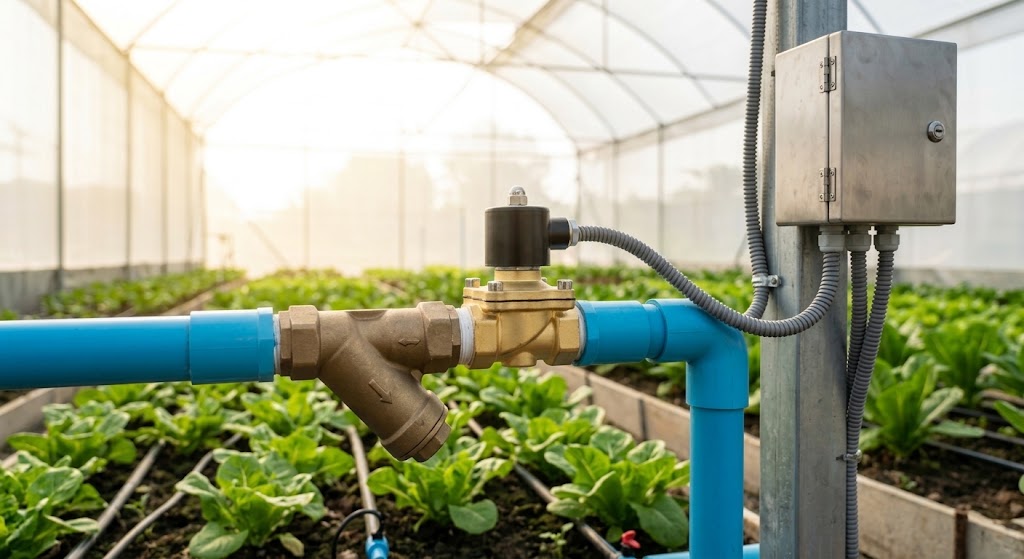
In automated irrigation and smart farming systems, the **Solenoid Valve** acts as the core actuator responsible for controlling water flow based on signals from microcontrollers or IoT systems. Choosing the right valve type for your specific application is critical for system stability:
1. AC vs DC Operating Voltage:
- **AC Type (220V AC):** Ideal for greenhouse installations with direct AC power access. It eliminates the need for power adapters but requires proper outdoor wiring safety.
- **DC Type (12V / 24V DC):** Commonly used in solar-powered (Off-Grid) smart farms. It offers high electrical safety and integrates seamlessly with low-voltage relay modules.
2. Valve Operational States (NC vs NO):
- **NC (Normally Closed):** The most widely used type in agriculture. The valve remains closed when unpowered to prevent water waste and opens when energized.
- **NO (Normally Open):** The valve stays open by default and closes when power is applied, typically used in specialized drainage or safety bypass systems.
Water Pressure and Pipe Sizing Calculation Techniques
Common issues like valves failing to open or leaking when closed often stem from mismatched pressure and pipe sizing:
- **Flow Rate (Cv) & Pipe Sizing:** Match the valve's thread size to your main supply pipe (e.g., 1-inch or 2-inch). Undersized valves cause significant pressure drops and uneven watering.
- **Operating Pressure Range:** Standard solenoid valves require a minimum operating pressure (typically 0.5 - 1 bar). For low-pressure gravity-fed drip systems, select **Direct Acting Solenoid Valves** that operate without water pressure assistance.
- **Flow Direction:** Always follow the directional arrow stamped on the valve body. Reverse installation causes leaks and internal diaphragm damage.
Wiring Solenoid Valves with Microcontrollers and Relays in Real Farms
Solenoid valves cannot be powered directly from microcontroller pins (e.g., ESP32, Arduino) due to current limitations. A **Relay Module** and protective circuitry are required:
- **Relay Switching:** Use a relay module to isolate the valve's power supply (12V or 220V) from the logic board, protecting microcontrollers from high currents.
- **Flyback Diode (for DC Valves):** Install a flyback diode across the DC valve coil to suppress voltage spikes (Back EMF) when the relay opens, extending controller lifespan.
Maintenance: Preventing Valve Sticking and Limescale Build-up
Groundwater and untreated agricultural water contain sediment and minerals, which are primary causes of valve clogging:
- **Y-Strainer Installation:** Always install a fine mesh filter upstream of the solenoid valve to trap debris before it reaches the internal diaphragm.
- **Periodic Cleaning:** If a valve fails to close completely, disassemble the top cover to remove limescale deposits and check the rubber diaphragm for wear.
- **Material Selection:** For fertigation systems using chemical fertilizers, choose brass or stainless-steel valve bodies to prevent corrosion.
Conclusion
Selecting and installing the correct Solenoid Valve for your automated irrigation system ensures stable, long-term operation, reduces maintenance downtime, and optimizes labor costs in modern agriculture.
For farmers, institutions, or enterprise farm managers looking to implement smart farming and IoT automation, explore more resources and technical solutions at agritechth.com