Smart Farm Control Box Comparison: PLC vs. Microcontroller (ESP32/Arduino) – Which is Better?
Pros and Cons of Industrial PLCs in Agriculture
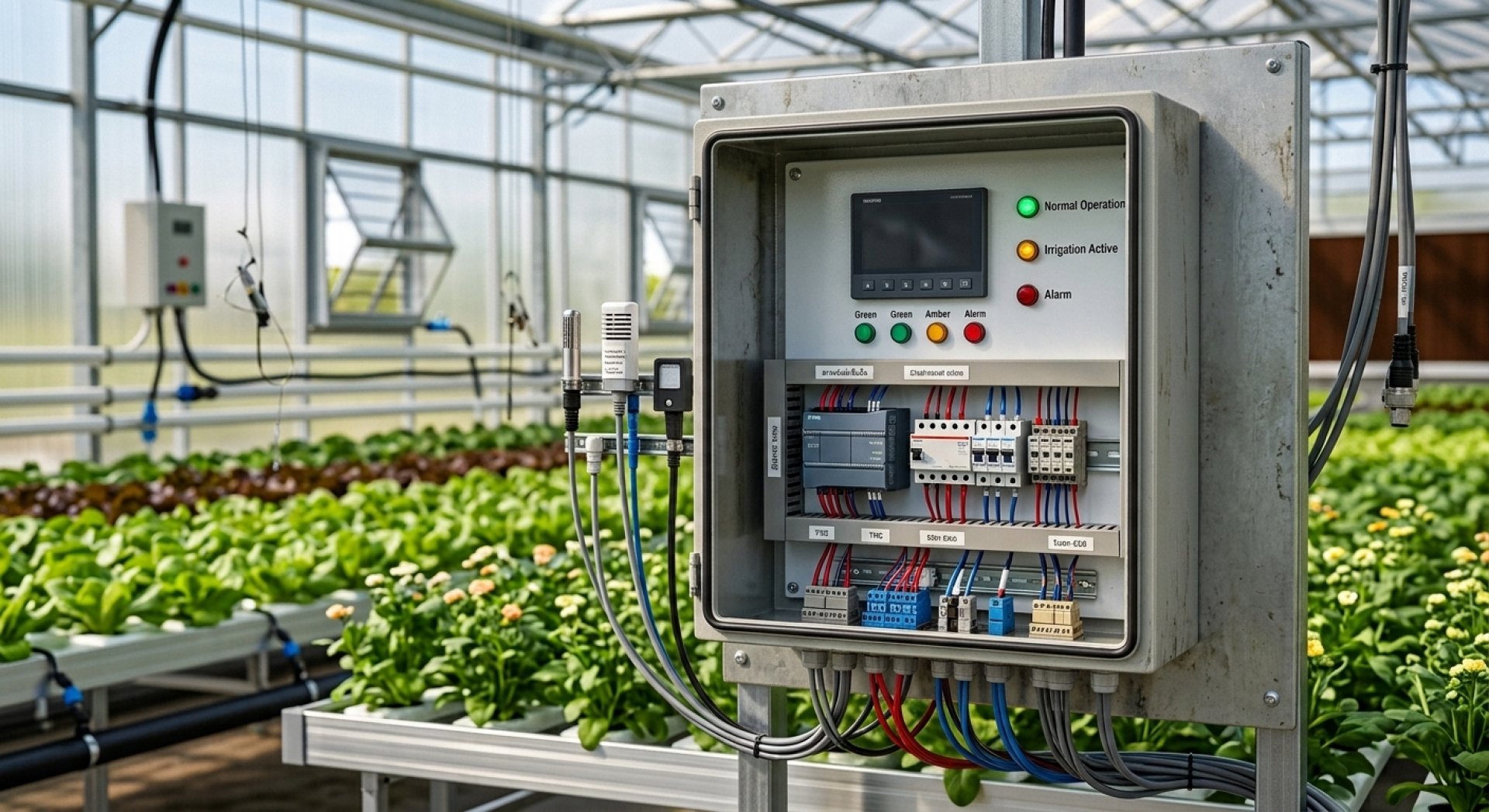
A PLC (Programmable Logic Controller) is an industrial-grade computer built to operate reliably in harsh working environments. It is widely used in heavy manufacturing and industrial applications.
Pros of PLCs:
- Maximum Stability and Durability: Designed for 24/7 continuous operation without hanging or crashing. Highly resistant to extreme temperatures, high humidity, and electrical noise commonly found in agricultural fields.
- Long Lifespan: Can operate reliably for over a decade with minimal maintenance required.
- High Operational Safety: Ideal for controlling heavy-duty water pumps, large motors, or high-voltage electrical systems that demand industrial safety standards.
- Standardized Connectivity: Seamlessly supports industrial communication protocols like Modbus RTU/TCP.
Cons of PLCs:
- High Initial Investment: Hardware costs, expansion I/O modules, and licensed programming software are relatively expensive.
- Limited IoT Flexibility: Although newer PLC models support cloud connectivity, developing custom user dashboards or integrating low-cost agricultural sensors can be complex and expensive.
- Specialized Knowledge Required: Programming requires specialized expertise in industrial languages such as Ladder Diagram or Structured Text (IEC 61131-3 standard).
Why ESP32 is the Preferred Choice for Small-to-Medium IoT Systems
The ESP32 (and Arduino board family) is a compact microcontroller chip known for its built-in Wi-Fi and Bluetooth capabilities. It has become a favorite among makers, startups, and small-to-medium farm operators.
Pros of ESP32:
- Extremely Cost-Effective: Very low hardware cost per board, significantly reducing the production cost of custom control boxes.
- Native IoT & Cloud Integration: Built-in Wi-Fi and Bluetooth Low Energy (BLE) allow direct data transmission to cloud platforms (such as Blynk, MQTT, Firebase, or Line Notify) without extra hardware modules.
- High Flexibility & Easy Coding: Compatible with Arduino C/C++ and MicroPython, enabling fast development of complex logic and custom features.
- Broad Sensor Support: Easily interfaces with a wide variety of budget-friendly soil moisture, temperature, pH, and water level sensors on the market.
Cons of ESP32:
- Lower Environmental Resistance: As a general electronic board, without custom waterproof housing and noise protection circuits, it can be vulnerable to power surges, lightning strikes, or moisture accumulation.
- Not Suited for Direct High Loads: Cannot directly drive high-current AC loads and must always operate through power relays or magnetic contactors.
- Shorter Lifespan: Compared to industrial PLCs operating outdoors in harsh agricultural conditions, microcontrollers tend to have a shorter operational lifespan.
Comparison Table: Value, Durability, and ROI
To give you a clearer picture, here is a breakdown comparing the key aspects of Industrial PLCs and ESP32 Microcontrollers:
| Feature | Industrial PLC | Microcontroller (ESP32) |
|---|---|---|
| Initial Hardware Cost | Very High (Hundreds to thousands of USD) | Very Low (Under $20$50) |
| Durability & Lifespan | Very High (510+ years of continuous use) | Moderate (Depends on enclosure design & protection) |
| System Stability | Excellent (Minimal crashes, highly reliable) | Moderate to High (Requires watchdog timers) |
| IoT / Cloud Capability | Requires add-on modules or high-end models | Excellent (Built-in Wi-Fi / Bluetooth) |
| Programming Complexity | Moderate to Hard (Requires specialized PLC skills) | Easy (Arduino IDE / MicroPython) |
| Ideal Farm Scale | Large-scale farms, high-risk systems, heavy pumps | Small-to-medium farms, hydroponics, greenhouses |
| Return on Investment (ROI) | Longer ROI (Best for zero-downtime operations) | Fast ROI (Ideal for budget-conscious startups) |
Recommended Control Box Architecture for Your Farm Size
There is no one-size-fits-all answer when choosing between a PLC and an ESP32. Your decision should align with your farm's scale and operational requirements:
- Choose a PLC if:
- You manage a large-scale farm, commercial irrigation network, or critical facility where system failure could cause severe financial losses.
- Your installation area experiences heavy electrical interference (e.g., near transformers or high-horsepower pump motors).
- You require maximum stability, minimal reboots, and a set-and-forget setup with long-term reliability.
- Choose an ESP32 if:
- You operate a small-to-medium smart farm, such as a herbal greenhouse, indoor farming setup, or hydroponic system.
- You want Smart IoT features like mobile dashboards, real-time cloud data logging, and instant Line/Telegram alerts within a limited budget.
- You are developing commercial Smart Farm products targeted at budget-friendly market segments.
Pro Tip: Many modern AgriTech developers adopt a Hybrid Approachusing an ESP32 for sensor data acquisition and cloud communication, while interfacing with industrial relay modules or a compact PLC to safely control heavy power loads. This combines the best of both worlds!