AI Plant Disease Detection Computer Vision for Edge AI
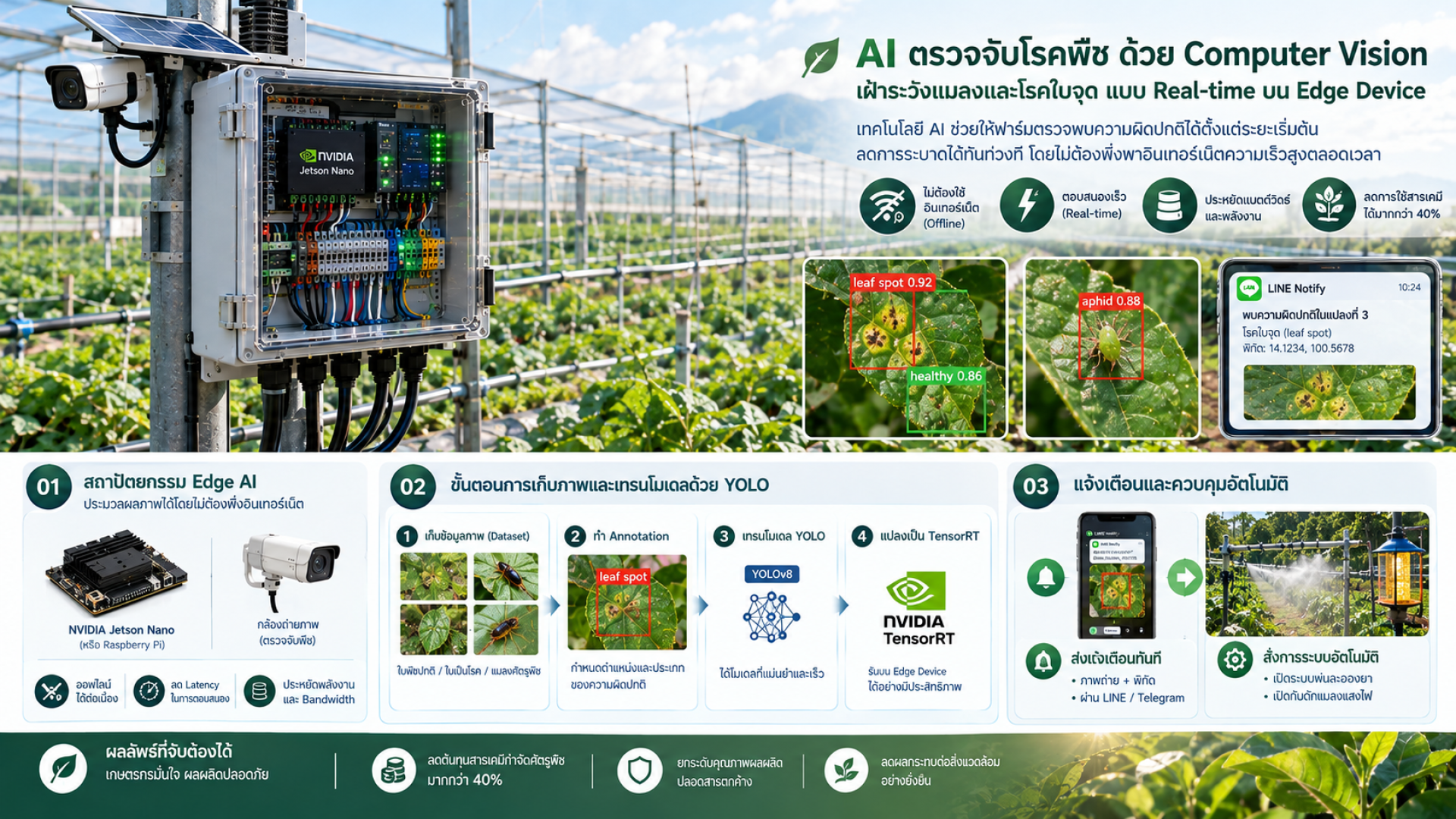
Pest infestations and leaf spot diseases pose severe threats to crop yields. Implementing AI Plant Disease Detection Computer Vision processing directly on Edge Devices enables farms to monitor, analyze images in real-time, and contain disease outbreaks instantly without relying on continuous high-speed internet connections.
Edge AI Architectures (e.g., Raspberry Pi / Jetson Nano) for On-Field Operations
Deploying artificial intelligence processing hardware directly inside farm fields (Edge Computing) offers critical operational advantages:
- Offline Processing Capabilities: Compact boards like NVIDIA Jetson Nano or Raspberry Pi execute AI models locally, maintaining continuous operation even in remote areas without internet coverage.
- Ultra-Low Latency Response: Camera image analysis occurs on the device instantly, allowing the system to trigger spraying valves or sirens within milliseconds.
- Bandwidth and Power Efficiency: Eliminates the need to upload heavy image files to the cloud, sending only lightweight alert data when anomalies are detected.
Dataset Collection Steps and Model Training for Plant Disease Detection via YOLO
Building an effective computer vision model to identify leaf spots and farm pests involves structured engineering steps:
- Dataset Collection & Preparation: Capture healthy leaves, leaf spot specimens, and common pests under varying lighting conditions and angles.
- Bounding Box Annotation: Label disease classes and draw precise boundary boxes on training images to teach detection algorithms.
- YOLO Model Training: Train state-of-the-art YOLO (You Only Look Once) models for high-speed multi-object detection, then optimize models via TensorRT for edge hardware.
Early-Stage Pest Infestation Alerting Systems
When edge devices identify leaf damage or early insect sightings, automated warning protocols initiate immediately:
- Instant Notifications: Send automated alerts accompanied by location coordinates and snapshot imagery directly to agricultural workers via messaging apps.
- Actuator Integration: Command smart farm control boxes to activate localized misting or light traps in affected field sectors immediately.
Financial Benefits: Cutting Chemical Pesticide Usage by Over 40%
Transitioning from blanket chemical spraying to AI-targeted precision application yields measurable cost benefits:
- Over 40% Reduction in Chemical Costs: Spraying exclusively on infected plants drastically reduces pesticide and fertilizer expenditure.
- Enhanced Produce Quality: Minimizes chemical residues on crops, making yields eligible for premium markets and export certification.
- Environmental Sustainability: Prevents chemical accumulation in soil and surrounding water tables for long-term farm health.