Off-Grid Solar System for Farm Control Cabinets
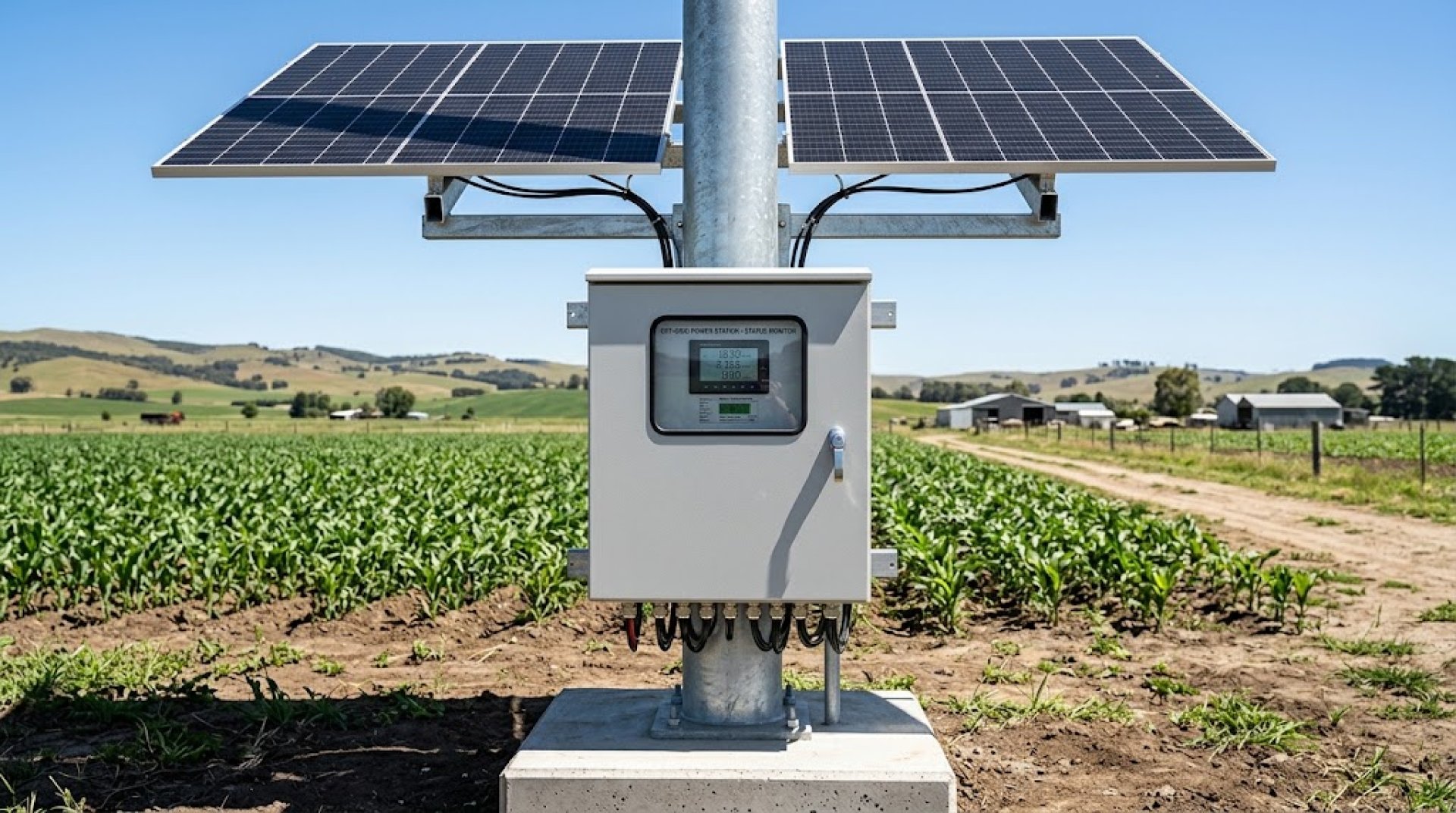
In remote agricultural areas or crop fields where grid electricity is inaccessible, relying on utility power is impractical. Implementing an Off-Grid Solar System for Farm Control Cabinets is an essential renewable energy solution, ensuring that water pumps, control panels, and IoT sensors operate reliably 24/7 without grid connections.
This comprehensive guide explores an Off-Grid Solar System for Farm Control Cabinets including energy load calculations, solar panel and inverter sizing, LiFePO4 battery backup for rainy days, and vital lightning surge protection.
Energy Load Calculation for Off-Grid Solar System for Farm Control Cabinets
The most crucial step before installing an off-grid solar system for farm control cabinets is accurate load calculation:
- Wattage Aggregation: Calculate total power consumption for all enclosure components, including ESP32 microcontrollers, solenoid valves, 4G routers, and DC/AC water pumps (accounting for motor startup surge currents).
- Daily Watt-Hour Estimation: Multiply device wattage by daily operational hours to determine total daily energy generation and storage requirements.
Solar Panel and Inverter Sizing for Off-Grid Solar System for Farm Control Cabinets
Power generation and conversion equipment for an off-grid solar system for farm control cabinets must account for limited daily peak sun hours:
- Solar Panel Selection: Utilize high-efficiency monocrystalline half-cell panels, oversizing generation capacity by 30-40% to compensate for cloudy days, rain, or low-light conditions.
- Off-Grid Inverter Sizing: Choose a pure sine wave inverter matching system voltage (12V, 24V, or 48V) with adequate surge ratings to handle motor startup loads effortlessly.
LiFePO4 Battery Backup Sizing for Rainy Days
To safeguard farm control systems against consecutive overcast or rainy days, energy storage requires rigorous planning:
- LiFePO4 Technology: Preferred for modern smart farms due to extended cycle life, thermal stability, and superior safety compared to conventional lead-acid batteries.
- Capacity Calculation (Ah): Plan for at least 2-3 days of autonomy during poor weather conditions while maintaining safe Depth of Discharge (DoD) limits under 80% to preserve battery health.
Lightning and Surge Protection Systems
Outdoor enclosures face high exposure to induced lightning strikes and electrical surges:
- Surge Protection Devices (SPD): Install industrial-grade SPDs on both DC solar arrays and AC power lines to protect expensive electronics.
- Grounding Systems: Proper grounding rods and enclosure earthing networks provide essential safety infrastructure.
Conclusion: Designing a reliable Off-Grid Solar System for Farm Control Cabinets empowers growers to implement precision agriculture in remote locations, eliminating power outage risks and ensuring long-term operational savings.
Recommended resources: Explore smart farm innovations at AgritechTH Smart Agriculture Hub and pair your setup with Automatic Solenoid Valves for streamlined fluid management.
Frequently Asked Questions about Off-Grid Farm Solar Systems (FAQ)
Q: Why choose LiFePO4 batteries over conventional car batteries?
A: LiFePO4 batteries offer significantly longer service life, deeper safe discharge cycles, better heat tolerance in agricultural environments, and enhanced safety without explosion risks.
Q: Can an off-grid solar system be expanded in the future?
A: Yes. By selecting parallel-compatible inverters and oversizing charge controllers from the start, systems can easily scale up as farm operations expand.