dc-circuit-breaker-fuse-solar-pump
Agricultural solar water pumping systems operate under extreme weather and high humidity, making electrical protection essential. Handling high DC voltage without learning how to select DC Circuit Breaker solar pump setups correctly can lead to dangerous control box fire hazards.
This article provides an in-depth guide on fuse calculation, voltage rating selection, and engineering best practices to select DC Circuit Breaker solar pump protection effectively.
Key Hazards: AC vs. DC Current Behavior
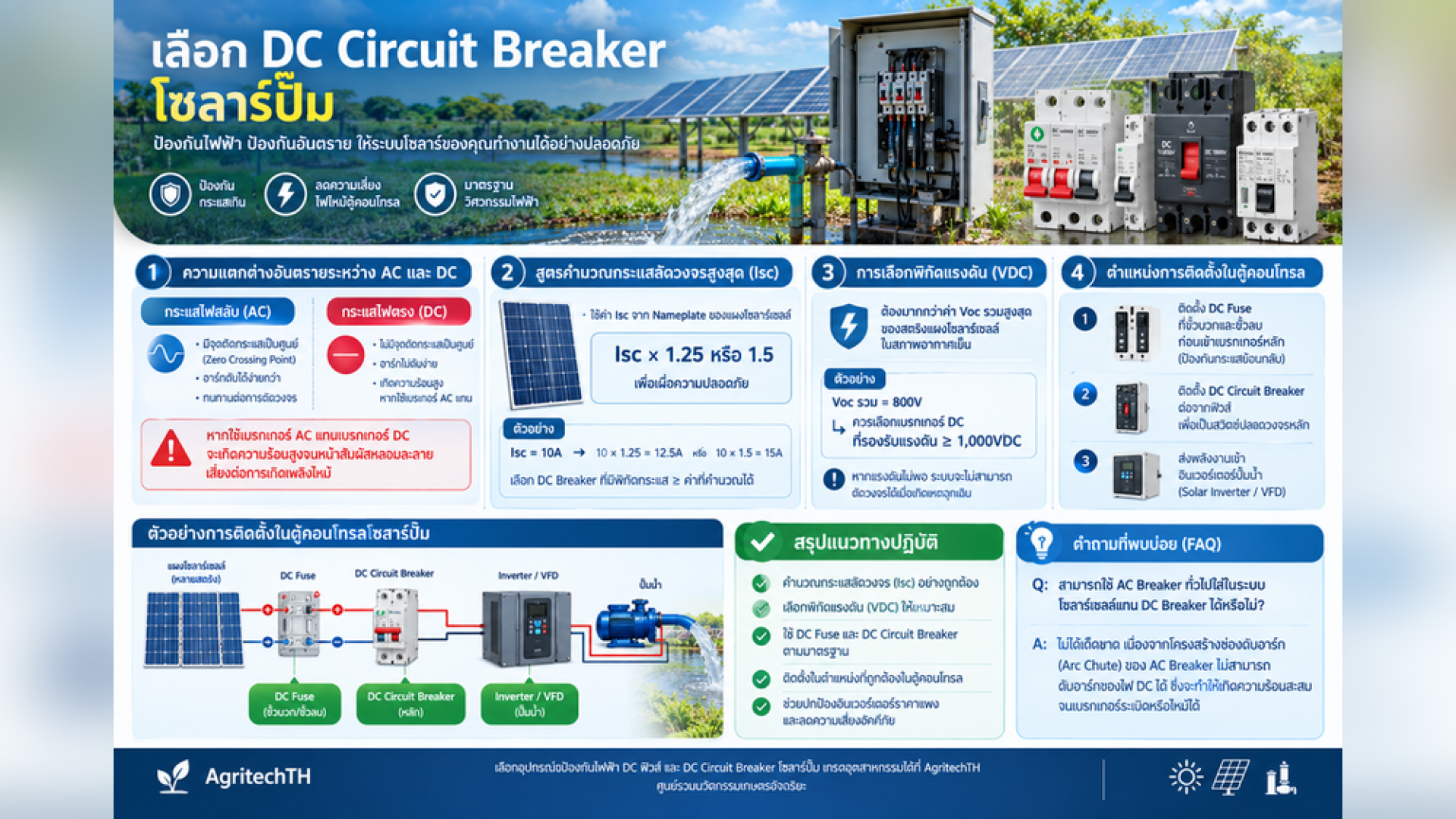
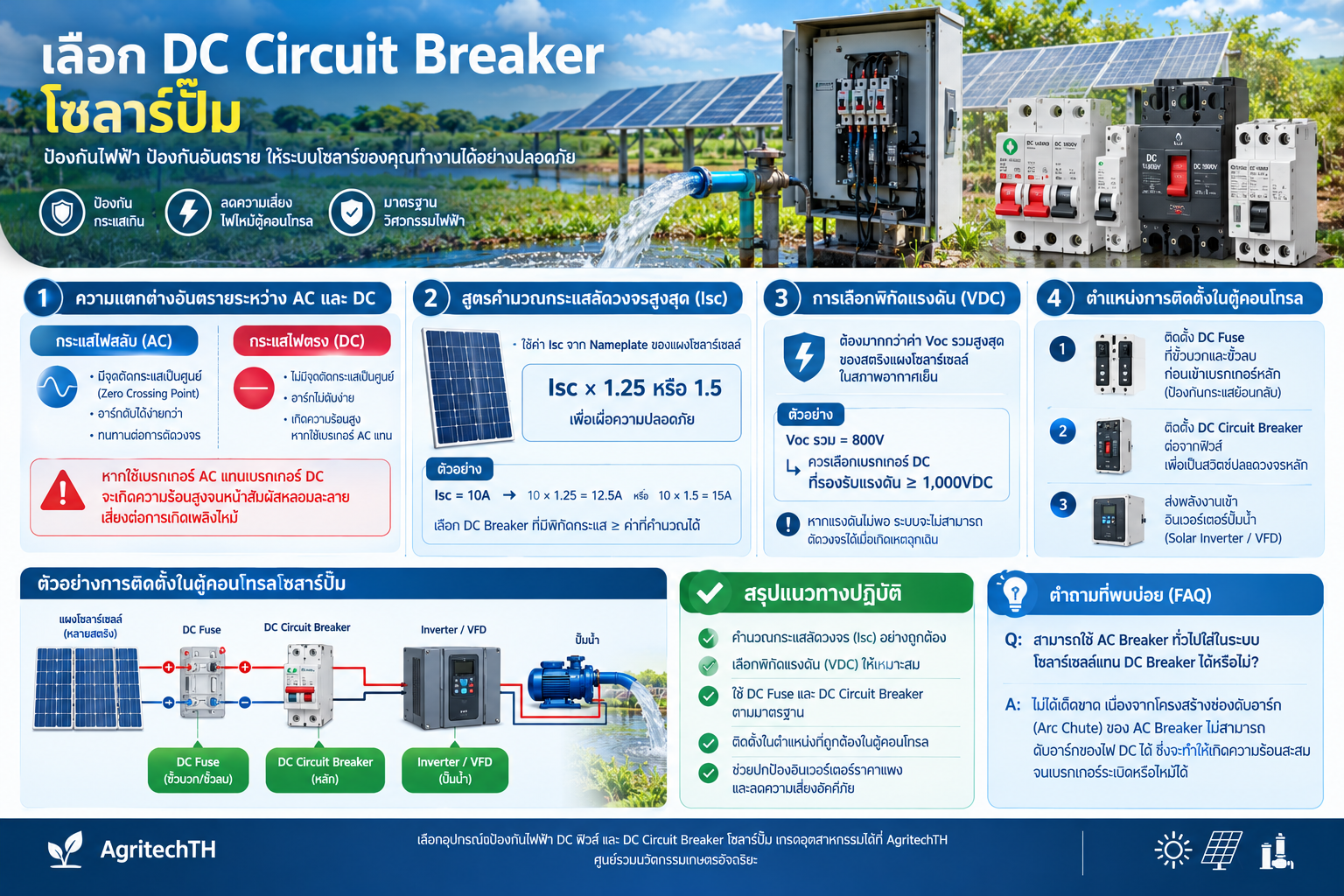
Unlike AC current, direct current (DC) from solar arrays lacks a zero-crossing point. When a fault or trip occurs, DC electrical arcs do not extinguish easily. Using standard AC breakers instead of DC units causes extreme heating and contact melting. Therefore, knowing how to select DC Circuit Breaker solar pump devices designed for DC arc suppression is the first rule of safety.
Calculating Maximum Short Circuit Current (Isc) and Sizing Table
Sizing fuses and DC breakers requires referencing the Short Circuit Current (Isc) from the PV module nameplate (using safety factors like Isc × 1.25 or 1.5). When engineers select DC Circuit Breaker solar pump ratings, the continuous amperage must cover calculated values as shown in the reference table below:
| Solar Pump System Size | Average Short Circuit Current (Isc) | Recommended DC Circuit Breaker Rating |
|---|---|---|
| 1.5 kW - 2.2 kW | ~10A - 13A | 16A DC Breaker (1000VDC) |
| 3.0 kW - 5.0 kW | ~15A - 22A | 32A DC Breaker (1000VDC) |
| 7.5 kW and Above | ~25A - 38A | 50A - 63A DC Breaker (1000VDC) |
Choosing the Right VDC Voltage Rating to Prevent Arcing
The rated DC voltage (VDC) of the breaker must exceed the maximum Open Circuit Voltage (total Voc) of the solar string under cold conditions. For instance, if total Voc reaches 800V, select a breaker rated for at least 1,000VDC. Proper voltage selection ensures the device safely interrupts high-voltage DC fault currents without sustained arcing.
Optimal Placement of Fuses and Breakers in Solar Pump Control Boxes
Proper installation requires placing gPV DC fuses on both positive and negative poles before the main breaker to prevent reverse current in multi-string setups. The main DC circuit breaker follows the fuses, serving as an isolation switch before powering the solar pump inverter (VFD). This configuration guarantees safe maintenance and reliable system protection.
Summary: Taking time to properly select DC Circuit Breaker solar pump protection according to electrical engineering standards shields expensive pump inverters and permanently eliminates electrical fire risks. For comprehensive large-scale pipeline management, explore Agricultural Hydraulic Control Valve integration guidelines.
Explore more products and expert advice: Discover industrial-grade DC protection devices, fuses, and guide tools to select DC Circuit Breaker solar pump hardware at AgritechTH - Smart Agriculture Innovations.
Frequently Asked Questions (FAQ)
Q: Can I use a standard AC breaker in a solar pump system instead of a DC breaker?
A: Absolutely not. The arc chutes in AC breakers cannot extinguish DC electrical arcs, leading to severe thermal buildup, melting, and potential fire explosion hazards.